323transaction platforms, and hybrid platforms. Multisided platforms function as a digital marketplace, lowering five economic costs—search costs, replication costs, transportation costs, tracking costs, verification costs (Goldfarb & Tucker, 2019). Expanding the DEE framework from digital markets to platforms brings platform strategy to life and makes the connection between the platform organization’s ecosystem and its value creation. The new configuration consists of: (1) Digital User Citizenship (DUC), which includes users on the demand-side and the supply-side; (2) Digital Technology Entrepreneurship (DTE), which includes app developers and various agents that contribute to entrepreneurial innovation, experimentation, and value creation on platforms; (3) Digital Multisided Platforms (DMP), which orchestrate social and economic activities between users and agents; and (4) Digital Infrastructure Governance (DIG), which pertains to all the regulations that govern the technical, social, and economic activities of digital infrastructure.10 The DPE Index lets us examine several key aspects of the platform economy in an integrated framework (Acs et al., 2021a, b). First and foremost, this means the new
9This section draws heavily on the Digital Platform Economy Index (Acs et al. 2021a, b). 10Nambisan (2017), Nambisan et al. (2018), and Sahut et al. (2021).
324Z. J. Acs
Fig. 1 The digital
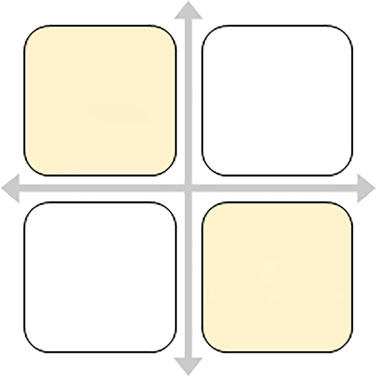
entrepreneurial ecosystem. Sections shaded in yellow Digital Ecosystems Users are the two biotic entities,
Digital
namely, digital users and
Digital User
Multi-sided
Citizenship
agents
Platform
Digital Infrastructure
Digital
Digital
Technology
Infrastructure
Entrepreneurship
Governance
Agents Institutions
Entrepreneurial Ecosystems
organizational form of the platform organization. The platform organization pulls together two sets of agents to create value. First, entrepreneurs innovate to build the technological core of platform companies. This is where the costs are. Second, users on both the demand and supply side form the other side of platform companies, where the money is. A thin layer represents the organizational and strategic part of the platform. The framework allows us to understand how both sets of agents are important and needed to create value in the platform economy.
The second aspect of the framework is infrastructure governance, without which the platforms could not operate. Digital infrastructure governance represents the technology of the digital age, along with the rules and regulations that govern its use through the nation-state. This technological infrastructure is crucial to the smooth working of the platform economy. It is also necessary for users and entrepreneurs to connect to platforms to be able to create the technological core of the platform. At its most basic level, it is the nation-state that is responsible for the smooth functioning of the platform economy. Finally, the DPE framework allows us to examine the performance of economies and to compare why some countries do better than others and what policies can be used to improve platform performance. The DPE Index examines the interconnection of the four sub-indices of the platform economy through 12 pillars.
The two shaded areas in Fig. 1 represent the digital entrepreneurial ecosystem. Digital User Citizenship consists broadly of consumers (the demand side) and producers (the supply side) that are proficient in platform usage. Digital users connect to each other for economic and social activities through the internet and mobile devices on various digital platforms. The diffusion rates of these technologies attest to their utility and to users’ willingness to adopt them. Online participation thus The Digital Platform Economy and the Entrepreneurial State: A European Dilemma
325requires a certain level of digital trust (e.g., user privacy) and digital proficiency (e.g., writing code, writing a movie review, rating a restaurant). Users should abide by the civic norms of the digital space and be discouraged from cybercrime (Terranova, 2000). Digital technology entrepreneurs are third-party agents that partake in experimentation, innovation, and value creation and use hardware and software to build products that connect to innovation platforms, such as the Internet of Things (IoT). This reconfiguration combines technological entrepreneurship and digital entrepreneurship (Giones & Brem, 2017). The answer to the policy question in the previous section on accelerating the transition to a more entrepreneurial society is in part found in Lafuente et al. (2021). The authors employ a ‘benefit of the doubt’ approach to evaluate the entrepreneurial ecosystem. By examining the relative efficiency of countries’ entrepreneurial ecosystem, the proposed analysis allows the computation of endogenous country specific weights that can be used for developing more informed policymaking. By analyzing the variation in economic and entrepreneurship outcomes over the seven-year period they found a significant correlation between quality improvements in the entrepreneurial ecosystem and venture capital investments.
3.1
Europe vs the World
The DPE Index allows us to examine European Entrepreneurial Ecosystem. Four conclusions can be drawn from Table 1, relating to the digital entrepreneurial