349These related perspectives offer valuable insights, yet seldom make a clear distinction between actors and institutions, and “the institutional variables that are used, such as technology absorption, gender equality, R&D spending, and depth of capital markets, are not institutional variables; they are outcomes resulting from the evolution of the economic system in a given institutional setup” (Braunerhjelm &
1Christopher Freeman, Bengt-Åke Lundvall and Richard Nelson jointly pioneered the National Systems of Innovation approach in the 1980s, which was developed into the Systems of Innovation approach in an extensive effort by a group of scholars in the 1990s (see Edquist, 1997). Many of them had close ties to the Science Policy Research Unit (SPRU) at the University of Sussex and its founder Christopher Freeman. This is also true for Mazzucato, who was the RM Phillips Professor in Economics of Innovation at SPRU in 2011–2017.
350N. Elert and M. Henrekson
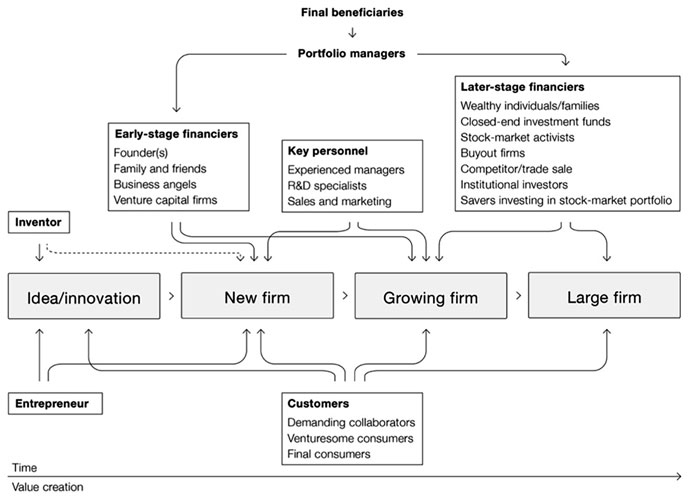
Fig. 1 The collaborative innovation bloc: an overview. Source: Elert and Henrekson (2021)
Henrekson, 2016, p. 101). Our reintroduction and reformulation of the CIB perspective (Elert & Henrekson, 2019a) resulted in a fruitful debate involving several entrepreneurship scholars (Lucas, 2019; Foss et al., 2019; Bylund, 2019; Elert & Henrekson, 2019b). We have applied the perspective to analyze what the European Union should do to become an entrepreneurial society (Elert et al., 2019) and to better understand Sweden’s transformation into an entrepreneurial economy (Elert & Henrekson, 2020). We have recently taken stock of what the perspective has taught us (Elert & Henrekson, 2021). Figure 1 provides an overview of the structure of skills that, according to the CIB perspective, are required to take an idea from inception to commercial use (e.g., Fenn et al., 1995; Gompers & Lerner, 2001). The skills and resources must be mobilized by drawing upon skill pools with six distinct, stylized skills: entrepreneurs, inventors, key personnel, early-stage financiers, later-stage financiers, and customers (Elert & Henrekson, 2019a). One person can embody more than one skill, but it is useful to consider them as distinct functions embodied by separate actors. For example, entrepreneurs generally have an overall understanding of how to exploit an opportunity but may lack specific knowledge regarding relevant technologies. Conversely, there is no reason to assume that inventors have a comparative advantage in bringing new ideas to the market as a good or service. In fact, Schumpeter (1934) distinguished between inventors and entrepreneurs, but the nuance was lost when modern growth models (e.g., Romer, 1990) collapsed invention, innovation, and commercialization into one decision (Acs & Sanders, 2013).
351Collaborative Innovation Blocs and Mission-Oriented Innovation Policy: An. . .
Entrepreneurs are regularly the prime movers: Most ideas and inventions originate with them or with inventors (Baumol, 2005). To commercialize the ideas, an entrepreneur or a group of entrepreneurs decides to create new collaborative teams, searching for and attracting the skills they perceive necessary to realizing their projects. In this role, entrepreneurs benefit from the skill pools in existing CIBs